Winery Carbon Capture Pilot Ready for Operation
Winery Carbon Capture Pilot Ready for Operation
The CERNET project has reached an important milestone at its winery demonstrator, hosted by one project partner ins Spain: Bodega Matarromera. The carbon capture and purification pilot has now been installed and is ready to operate during the upcoming wine production season, marking a key step towards demonstrating innovative carbon capture and utilisation (CCU) technologies under real industrial conditions.
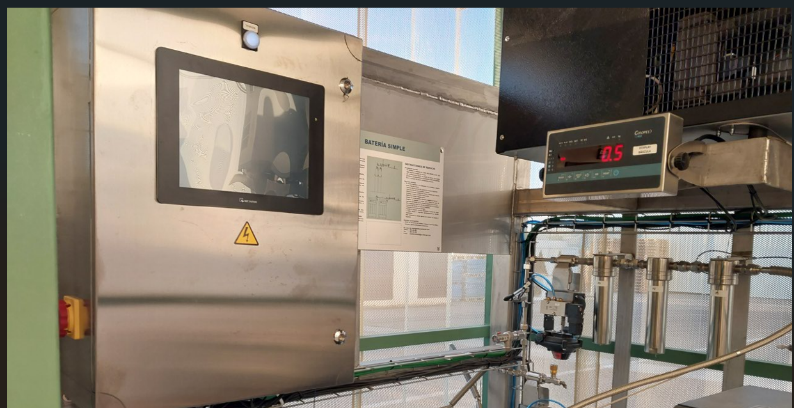
Operations carried out by Bodega Matarromera, where the process can be visualized and controlled via an on-site and/or remote control panel, and where we have worked with various storage systems.
Within CERNET, wine fermentation is being explored as a valuable source of biogenic carbon dioxide. While this CO₂ is traditionally released into the atmosphere, the project aims to capture and upgrade it so it can become a resource for the production of new bio-based products and ingredients. Demonstrating this approach in a commercial winery environment is essential for assessing the technical feasibility, operational performance and future replication potential of the technology.
A Collaborative Technology Development
The system has been developed through the collaboration between two CERNET partners Bodega Matarromera and CARTIF. The system integrates several purification technologies designed to obtain high-purity biogenic CO₂ while also enabling the recovery of valuable aromatic compounds naturally released during wine fermentation. These recovered compounds could create additional valorisation opportunities within winery processes.
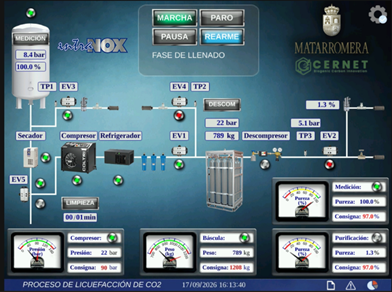
Testing Under Real Production Conditions
The upcoming operational phase will provide the project consortium with its first opportunity to evaluate the system under real production conditions. Data collected during the campaign will help optimise performance, assess scalability and generate knowledge for the future deployment of similar solutions in wineries and other bio-based industries across Europe.
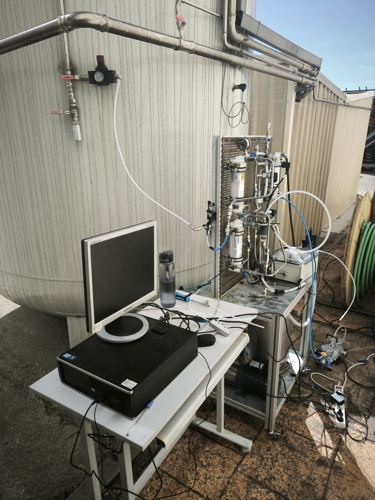
CO₂ capture equipment used at Matarromera facilities.
Towards Circular Carbon Solutions in the Wine Industry
This milestone represents an important achievement for CERNET's Demonstrator 3 and highlights the project's broader ambition: transforming biogenic carbon emissions from industrial activities into valuable resources that support a more circular and sustainable bioeconomy.