Turning Waste Gases Into Tomorrow’s Ingredients
CERNET Advances Sustainable Value Chains: Turning Waste Gases Into Tomorrow’s Ingredients
CERNET has completed a key milestone: a baseline evaluation of all four value chains and the development of a tailored Safe‑and‑Sustainable‑by‑Design (SSbD) framework. This work sets the foundation for assessing impacts, guiding technology optimisation, and ensuring that sustainability is embedded from the very start of the project.
Across Europe, industries are increasingly seeking new ways to reduce emissions and create value through circular, bio‑based solutions. The EU‑funded CERNET project is taking a major step in this direction by transforming biogenic CO₂ and methane from agriculture, food production, and biogas operations into valuable ingredients for food, cosmetics, cleaning products, and packaging. As part of its early work, CERNET has now completed a preliminary environmental and sustainability assessment of its four value chains—an initial baseline that will later be expanded into a full and comprehensive evaluation in later a work-package once detailed pilot‑scale data become available.
The project develops and scales several innovative technologies—including microbial fermentation, CO₂‑to‑methanol conversion, advanced downstream processing, and modular carbon‑capture solutions—to build four integrated value chains. These routes aim to replace fossil‑based and sugar‑based chemicals with sustainable alternatives derived from waste gases.
A Key Milestone: Establishing the Foundation for Safe and Sustainable Innovation
A recently submitted deliverable marks an important early achievement for the project. It provides a full baseline evaluation of all four value chains, assessing material and energy flows, safety considerations, environmental performance, and the regulatory landscape in which these technologies will operate. This creates a solid foundation for further development and performance optimization during the upcoming pilot demonstrations.
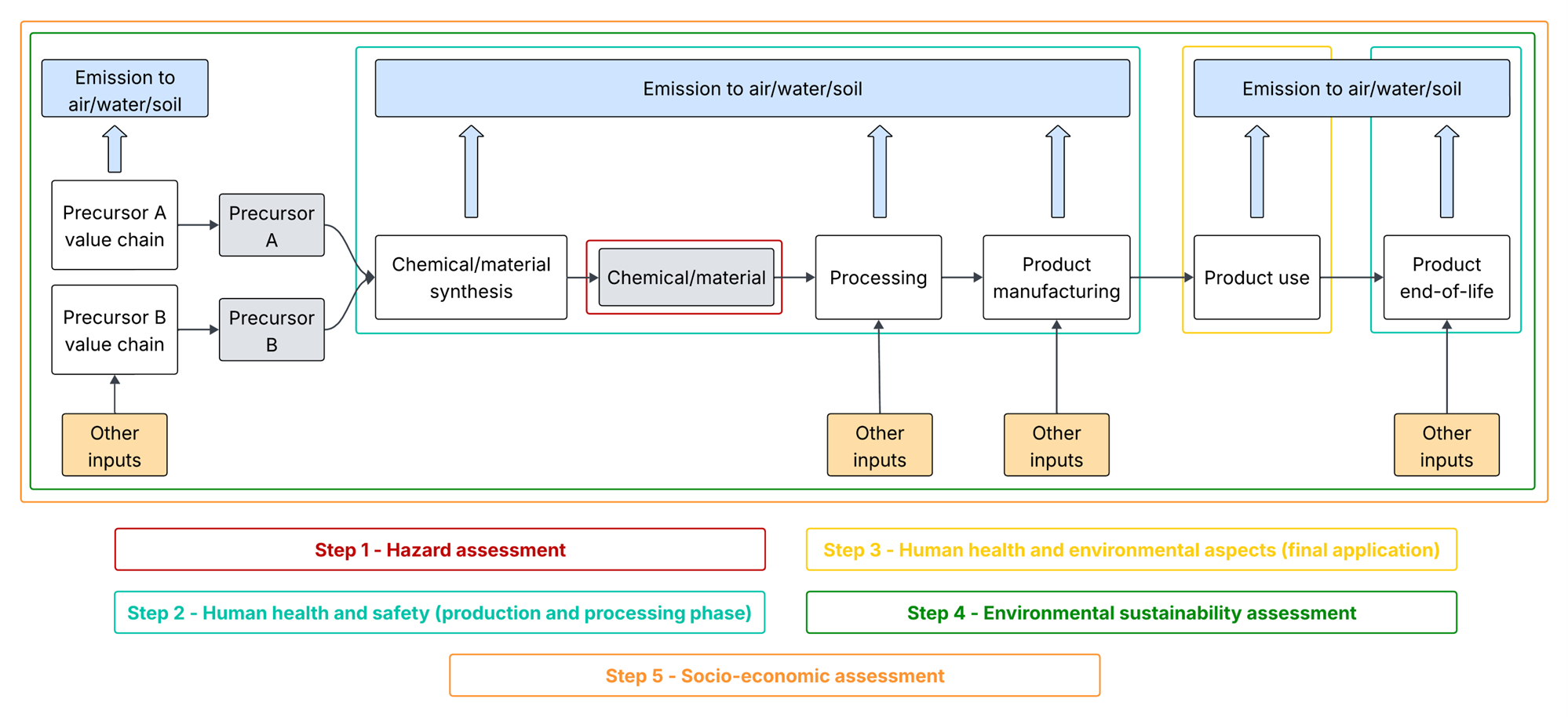
The deliverable also introduces a CERNET‑tailored Safe‑and‑Sustainable‑by‑Design (SSbD) framework, adapted from EU guidance. This framework ensures that safety, environmental impact, social responsibility, and economic viability are integrated into the design and scaling of all technologies from the outset.
What the Value Chains Aim to Produce
CERNET’s four bio‑based value chains focus on converting biogenic carbon into:
- Food and cleaning ingredients such as protein hydrolysates and L‑alanine
- Platform chemicals including L‑malic acid and sorbitol, derived from CO₂‑based methanol
- Bio‑based packaging materials through the production of PHA biopolymers
- High‑value cosmetic ingredients like ectoine, produced from methane‑fed bioprocesses
Together, these value chains demonstrate Europe’s potential to replace critical fossil‑based inputs with sustainable, circular solutions.
Why This Matters
CERNET is more than a technical project—it presents a vision of a future where:
- Industrial biogenic emissions become resources rather than waste
- Rural and regional industries gain new circular business opportunities
- Europe strengthens its capacity to produce key ingredients sustainably
- Emerging technologies are designed responsibly, using SSbD principles from day one
This combination of innovation, safety, and sustainability is essential for building resilient European value chains powered by renewable carbon.
What Comes Next
As the project moves into its next phase, teams will focus on:
- Operating pilot plants and collecting real‑world performance data
- Quantifying environmental benefits using full life‑cycle assessments
- Evaluating economic and social impacts
- Preparing ingredients for testing in food, cosmetic, packaging, and cleaning applications
These steps will bring CERNET closer to delivering market‑ready, safe, and sustainable carbon‑smart products for European industry.